

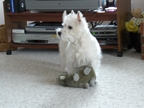
Guidelines for using dog products
with Westies
Everyone enjoys compliments when walking a Westie - ‘what a beautiful dog, such a handsome fellow’. ‘That’s a fine dog you have there’. The basics are, of course, a healthy, well mannered, well bred dog, maintained with good nutrition, exercise and dedicated grooming. We live in a society today that believes there is a product to do anything and everything. In the last few decades manufacturers of products for dogs, claiming to do it all have mushroomed into multi-million dollar businesses. The westie owner’s idea is to have a healthy, happy, energetic little companion. To make this work, some time must be spent learning which products are reasonable for the westie, and which are not.
Food
One of the biggest health issue westies have is itchy skin caused by allergies. In the extreme, the dog will literally tear its coat out. Even a persistent mild itch should be examined by a vet to be assessed. Skin conditions can be either helped or aggravated depending on what food is used. Your vet and staff are trained to understand the relationship of diet and allergies in westies. There is information on the net, but there is no guarantee as to the quality of the products offered or the qualifications of the people giving information and selling those products.
Whether you decide to feed dry, canned, or raw food, is your decision, but note that there are both good and poor quality products in each category. Be alert to canned food being mainly water. Read the label. If your choose raw food, be alert to the fact the you will spend a bit more time on preparation and need substantial freezer storage space. Check to be sure the supplier you choose has used meats up to Canadian or U.S. standards for feeding and processing. The bones must be ground small enough as to not stick in the throat or intestine of your dog. Learn from your vet the proper balance of protein, fat and other nutrients for your westie at his present age. This enables you to read packaging labels quickly and accurately. The vet can also give you recommended amounts to maintain a healthy weight. Remember, overweight in dogs leads to health issues and that means unnecessary vet expense which you can avoid by proper feeding. Food ingredients may need to change due to illness or aging, but your vet will tell you if and when that is needed.
There are many foods advertised to be all natural. These may well have ingredients which your westie does not need, or worse, may be harmful to him, especially if he has skin issues. Read the labels carefully, and if you do decide to feed these products, watch for any changes in the stool, or any increase in scratching.
Treats
There are all sorts of treats available, most in eye catching packaging. These are not treats designed to be healthy for dogs, as they contain food colour and too much salt. Many are imported from countries where food safety regulations are not the same as Canada and U.S. standards. Your dog does not need any of this sort of food. Your can use boiled chicken breast, boiled beef, bits of raw carrot or peas, or tiny bits of regularly fed food. The dog will love any of the above. Note that bones are not recommended for dogs at all any more, because they tend to splinter. Also, the American SPCA poison control centre reminds us that raisins-grapes can be deadly to dogs even in small amounts. There are many so called natural, home made treats on the market. Read the label carefully, and preferably buy from people you know have actually made them. We all love to treat our pets but as the dog does not know good from bad, the decision is up to us. Keep your treats simple, healthy, and small.
Food Supplements
Food supplements are exactly what they say - ingredients designed to make up for something lacking in the normal diet. They are not designed to be used as ‘super’ pills, to do something super for your dog. If you feed your dog the proper portion of high quality dog food and give him good exercise, you don’t need supplements unless the vet has recommended them for a specific need.
So how do you know you are feeding the right amount of the right food? If you have a happy healthy energetic dog that doesn’t scratch often and has regular firm stools, you’re on the right track. If you can feel his ribs easily, you will know he is not overweight. Specific health questions can be answered by the vet over the phone and he will determine if you should make an office visit.
Fashion Accessories
Some folks enjoy dressing up their dogs. Remember the westie is a hardy working terrier, not a toy breed. Being white, and from Scotland, he looks great in a sporty sweater or jacket, red or red plaid with red collar and leash. Any clothing should be free of ruffles and strings that could obscure his vision or get caught on anything. Clothes for westies are for dress-up occasions or for winter outdoor protection and should not remain on the dog for an unnecessary length of time, as it is not natural for dogs to wear clothes. Look for washable lightweight materials.
Crates and Toys
For these items, Crates, Crate Training, Toys, there are articles already on this website. Always buy well-made and safe products. The American Kennel Club sponsors a line of small prey-animal plush toys that look real. Westies really like them. They are available from pet supply stores. Always watch for well made simple toys with non edible parts.
First Aid
Your vet has booklets that give the latest specific first aid information you need to save your dog’s life in an emergency. As well, they have information on the best methods to transport and injured animal safely, and a list of life-threatening symptoms which indicate going to the vet at once. Trying to diagnose symptoms yourself, or hunt for information on the net may not prove relevant and takes time you may not have.
Grooming Products
There is currently a study in the U.S. to find the gene responsible for westie skin allergies, but nothing is final yet. So, bear in mind that even a dog showing no signs of allergies at present can have a dormant condition which will erupt with overuse of chemicals. This means grooming products must be kept to a minimum. Shampoo for instance - one Ontario pet supplier carries 242 products for the dog’s hair. These include cleaners, de-tanglers, scents, whiteners, shiners, conditioners, herbals, refreshers, botanicals, etc., etc. It would be next to impossible to sort out which ones would or would not cause an allergic reaction in a westie. Again your best bet is your vet who knows your dog’s health and from experience can make recommendations on skin products. Westies don’t need whiteners, moisturizers, perfumes, or conditioners etc. So what do they need? Assuming you have dealt with the good nutrition and plenty of exercise aspects, you will need a dog comb, ordinary hair brush, mild shampoo, and a towel to dry the dog (no electric hair dryers). The most important tool of all is your own time, dedicated to a thorough brushing every other day. It sounds like a lot, but it isn’t really. Your dog’s coat will be healthy and glow white. You can also keep a close eye on the condition of the skin.
When it comes to cutting the coat, note that the harsh westie coat can only be maintained by hand stripping, a skill that takes hands-on instruction and months of practice to perfect. Most pet owners use a groomer for their westie. You should find one knowledgeable of westies and be prepared to ask her to use shampoo recommended by your veterinarian, to use a towel for drying the dog, and not to use conditioners whiteners, or perfume. Groomers will actually do what you ask if you insist. If your dog’s skin is happy with the shampoo you are currently using, don’t be conned into buying other products by your groomer, or by advertisers.
Teeth and Ears
Teeth and ears must be kept clean on a regular basis. The veterinarian staff person will show you the proper technique for each process, and either sell you the necessary supplies, or tell you where to get them. These are neither expensive nor time-consuming routines, but can save you hundreds of dollars as well as much suffering by your westie if you do them on a regular basis. Human products are not chemically designed for use with dogs.
Nails
Dog nails must be kept short. If your dog is mainly a house pet , he will need the nails either clipped or filed on a regular basis. Many dogs do not like this particular process, so ensure that the groomer does the nails at each grooming session. If you do it yourself, use a clipper designed for the purpose - available at pet stores - they are all about the same. Some people prefer a file or a grinder. Which ever instrument you use, be careful not to damage the ‘quick’. Proper files and grinders are available at pet stores, and all are only as good as the person operating them.
In summary Use only the products your westie needs to be happy and healthy. Keep in touch with your vet - no question is too foolish to ask if you need the answer. Feed your Westie well, give him lots of exercise, and put grooming into a ‘must do’ routine.
Author: Anne Matheson.